Why democracies fight dictators
Description
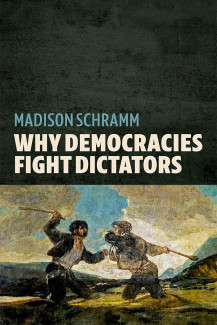
Madison SCHRAMM. Why democracies fight dictators. New York, NY : Oxford University Press, 2025. Online resource, e-book.
In Why Democracies Fight Dictators Schramm explores the dynamics that intensify conflict between liberal democracies and personalist regimes. Much of the recent Political Science scholarship has been devoted to explaining why democracies don't go to war with one another, but there is still relatively little work on the particular dynamics that mark the relationships between democratic governments and autocratic states. Schramm argues that when conflicts of interest arise between liberal democracies and personalist regimes, leaders in liberal democracies are predisposed to perceive personalist dictators as more threatening, and to respond with anger, an emotional response that elicits more risk acceptance and aggressive behavior. Schramm explores how this tendency facilitates a dramatic increase in hostility, applicable broadly to escalatory dynamics and coercion, extending to everything from covert action to crisis bargaining. Building on research in Political Science, History, Sociology, and Psychology and marshalling in evidence from statistical analysis of conflict, multi-archival research of American and British perceptions during the Suez Crisis and Gulf War, and non-democracies understanding of the threat from Saddam Hussein's invasion of Kuwait, Schramm offers a novel and nuanced explanation for patterns in escalation and hostility between liberal democracies and personalist regimes.
In Why Democracies Fight Dictators Schramm explores the dynamics that intensify conflict between liberal democracies and personalist regimes. Much of the recent Political Science scholarship has been devoted to explaining why democracies don't go to war with one another, but there is still relatively little work on the particular dynamics that mark the relationships between democratic governments and autocratic states. Schramm argues that when conflicts of interest arise between liberal democracies and personalist regimes, leaders in liberal democracies are predisposed to perceive personalist dictators as more threatening, and to respond with anger, an emotional response that elicits more risk acceptance and aggressive behavior. Schramm explores how this tendency facilitates a dramatic increase in hostility, applicable broadly to escalatory dynamics and coercion, extending to everything from covert action to crisis bargaining. Building on research in Political Science, History, Sociology, and Psychology and marshalling in evidence from statistical analysis of conflict, multi-archival research of American and British perceptions during the Suez Crisis and Gulf War, and non-democracies understanding of the threat from Saddam Hussein's invasion of Kuwait, Schramm offers a novel and nuanced explanation for patterns in escalation and hostility between liberal democracies and personalist regimes.