 The College of Europe in Natolin is an experienced provider of training and educational projects, designed and implemented in close cooperation with the beneficiary institution. This allows to offer an educational experience perfectly fitting the particular needs of each training group. Our project always contain transfer of knowledge combined with skill-building elements, that allow participants to make best use of the acquired expertise.
Our projects address learners coming from different walks of professional lives, i.a.:
- civil servants;
- journalists and media professionals;
- civil society;
- academia;
and regions, notably:
- the European Union;
- countries covered by the European Neighbourhood Policy;
- the Western Balkans.
Knowledge providers engaged in our project include current officials of the European Union and Members States or international organisation, former officials with practical experience in various areas of expertise, media professionals, non-governmental organisations, academics, and others.
Most of our project have been funded by the European Union. Below is a brief presentation of select projects delivered by the College of Europe in recent years.
For more information please call Mr Marek TABOR, Head of Executive Education Office, College of Europe in Natolin, at +48 22 54 59 475, or write to: marek.tabor@coleurope.eu.
Natolin Borderland Study Trip Module of the European Union Diplomatic Academy
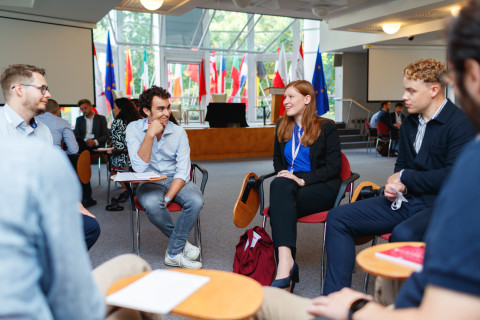
Since the summer of 2022, the College of Europe in Natolin has hosted the Natolin Borderland Study Trip Module of the European Union Diplomatic Academy (EUDA).
The European Union Diplomatic Academy is implemented by the College of Europe on behalf of the European External Action Service (EEAS), bringing together junior diplomats from EU Member States and representatives of EU institutions. Initially, the EUDA was delivered through three editions under the European Diplomatic Academy pilot project, which included the Natolin Borderland Study Trip Module as a key component.
The Natolin Borderland Study Trip Module provides participants with a unique opportunity to explore the roots, hybrid nature, and consequences of the full-scale Russian invasion of Ukraine, and its implications for local, regional, and global security.
During the module, participants have the chance to engage in meaningful, open discussions with EU and Member State officials, think tank experts, NGO leaders, journalists, and other professionals.
A highlight of the module is a two-day field trip to the EU’s external border with Ukraine. This immersive experience allows participants to witness first-hand the realities of life at the EU’s eastern frontier during wartime. They meet with representatives of local authorities, allied military personnel, Border Guards, international organisations, NGOs providing humanitarian aid to war refugees, and others.
Learn more about the Natolin Borderland Study Trip Module here.
Training on Accession Negotiations at the College of Europe in Natolin

Launched in 2024, the Training on Accession Negotiations programme is a joint initiative of the College of Europe in Natolin and the Institute for European Policies and Reforms (IPRE) in Chisinau, implemented in cooperation with the Bureau for European Integration of Moldova.
This project is designed for Moldovan civil servants, policymakers, professionals, and media representatives involved in the EU accession process. It aims to deepen their understanding and strengthen their skills related to European integration, particularly in preparing for and participating in accession negotiations.
The programme features expert-led webinars and in-person training sessions at the College of Europe in Natolin. These activities provide valuable insights into EU accession negotiations and policymaking, drawing on lessons from former EU member state accessions and current candidate countries. This approach enables participants to grasp the complexities of the accession process more effectively. A highlight of the programme was a week-long onsite training held in June 2024 at Natolin, where selected Moldovan officials engaged in intensive sessions with experts, gaining practical knowledge from real-life experiences and success stories of previous negotiations.
Participants also benefit from comprehensive e-learning modules that expand their understanding of the negotiation stages and structure, EU legal and institutional frameworks, obligation monitoring, and more.
In 2024, two editions of the programme were delivered, the second of which was supported by the Konrad Adenauer Foundation Office in Chisinau. The year also marked the beginning of preparations for a third edition, scheduled for mid-2025.
Learn more about the Training on Accession Negotiations at the College of Europe in Natolin here.
Natolin4Capacity Building
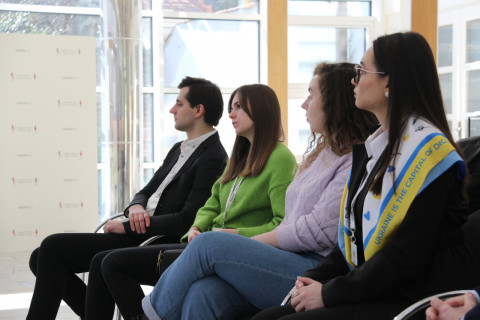 Natolin4Capacity Building (N4CB) was an EU-funded project implemented between 2021 and 2024. Its primary objective was to support the institutional capacity-building of Ukraine’s central administration in preparation for the EU accession process, including the accession negotiations, through a comprehensive and tailor-made blended training programme.
This innovative initiative employed a variety of teaching methods, notably:
An e-learning platform offering foundational knowledge about the European Union—its structure, functioning, and legal framework—with over 6,600 registered users;
A suite of 32 e-learning modules (available in both English and Ukrainian) covering diverse aspects of EU–Ukraine relations and the accession negotiations, resulting in the issuance of over 3,800 certificates of completion;
A series of 12 two-month on-site training programmes, each specifically tailored to the needs of different participant groups, involving a total of 60 civil servants. Each course featured customized workshops, expert lectures, simulation games, peer meetings, and study visits to public administrations in EU Member States as well as to EU institutions.
Participants in the on-site courses, conducted at the College of Europe in Natolin, worked under the guidance of experienced mentors to produce 52 analytical papers. These papers addressed issues anticipated to pose challenges for Ukraine during the accession negotiations, providing both problem descriptions and potential solutions.
The project concluded in September 2024. Given its highly positive evaluation by participants and partner institutions in Kyiv, a decision was made to continue its activities under the N4CB – Phase II project. This new phase is being implemented by the College of Europe in Natolin in partnership with the High School of Public Governance, and in cooperation with the Office of the Vice-Prime Minister of Ukraine for European and Euroatlantic Integration, the Government Office for Coordination of European and Euroatlantic Integration, and the EU Delegation in Kyiv.
Learn more about the Natolin4Capacity Building project here.
Poland – Training for Administrative Capacity of Moldova@Natolin (Poltac@NATOLIN)

The College of Europe in Natolin, in partnership with Solidarity Fund PL, is implementing the PolTAC@Natolin — a targeted training initiative designed to support Moldova’s public administration as it prepares for EU accession. The programme is made possible thanks to the generous support of the Ministry of Foreign Affairs of Poland, offered in the framework of Development Cooperation.
This project draws on the College’s long-standing experience in delivering high quality training to civil servants from EU candidate countries. The programme focuses not only on building technical knowledge but also on developing the practical skills required for effective participation in accession negotiations and the implementation of the EU acquis.
Executed between July and December 2025, the PolTAC@Natolin supports Moldova’s efforts under Cluster 3: Competitiveness and Inclusive Growth, with the Bureau for European Integration serving as the key institutional partner. The target group includes up to 20 Moldovan civil servants—key members of the relevant working groups—alongside additional participants engaged in follow-up activities in Chișinău.
Central to the initiative are intensive one-week training sessions hosted at the College of Europe in Natolin focusing on select chapters of the acquis – e.g. Chapter 16: Taxation or Chapter 29: Customs Union. Each module features expert-led sessions by practitioners from EU Member States who have hands-on experience with legal harmonization and implementation of laws, policy development, and the EU negotiation process. These insights are further enriched by discussions with e.g. European Commission or EU Member State official officials.
The training goes beyond knowledge transfer, offering strong skills development components, covering e.g. policy and sector analysis or regulatory impact assessments. Participants also gain practical understanding of prerequisites of effective domestic coordination mechanisms, inter-agency collaboration, and cooperation between government and parliament in the approximation process. During the week in Natolin, participants also have an opportunity to discuss the Polish experience in preparation of sector-specific components of the European integration information programmes for the society.
Learn more about the project from its brochure.
Project financed within the framework of the Polish development cooperation of the Ministry of Foreign Affairs of the Republic of Poland. www.gov.pl/web/polishaid

Coal Regions Learning Academy
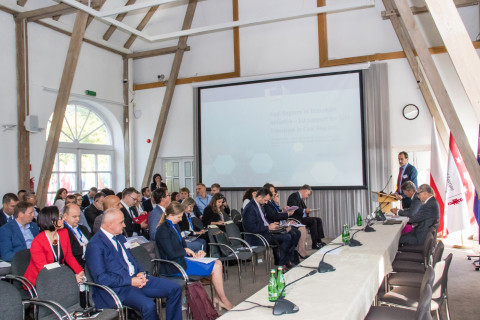 The goal of the Coal Regions Learning Academy (CRLA) - prepared in partnership with the World Bank available the World Bank’s GOXI website - is to address capacity gaps that are preventing coal regions in the Western Balkans and Ukraine from successfully designing and implementing transition strategies and associated kick-start projects as part of the beneficiary countries' energy transitions. The CRLA courses are based on a diverse set of case studies, global best practices in technical subject areas, the application of analytical tools, and current regulatory and administrative processes.
The CRLA is addressing the central, regional and local administration, workers of the coal-sector and dependent industries and their representations, the business community affected by coal transition, civic society, etc.
Learn more about the Coal Regions Learning Academy here.
Journalistic Craft for Neighbourhood
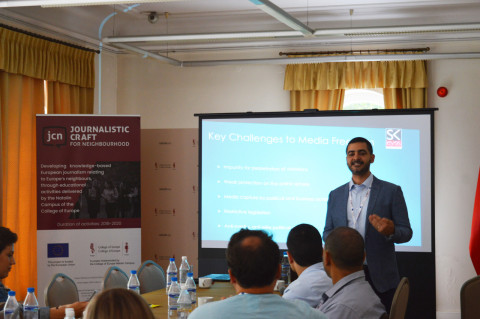 The Journalistic Craft for Neighbourhood (JCN) programme is yet another example of a state-of-the-art professional training offered by the College of Europe in Natolin. The JCN was a blended learning project, funded by the EU and implemented in 2018-2020. The JCN’s target audience were journalists, but it addressed the needs of a wider group of media professionals, news editors and mangers, select civil society groups or think tanks.
The goals of the JCN were to strengthen knowledge-based journalism and the improve the capacity of media, whether in EU or ENP countries, to report in a reliable, value-sensitive and data-based fashion on EU-ENP relations and regional issues.
Learn more about Journalistic Craft for Neighbourhood here.
More information about the key Executive Education activities of the College of Europe in Natolin in 2024 can be found here.