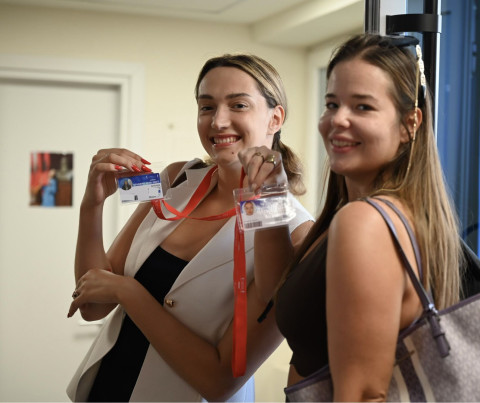
Welcome to Tirana, Johannes Gutenberg Promotion!
On Monday, 24 August, we had the pleasure of welcoming the very first students of the Johannes Gutenberg Promotion to our Tirana campus! As they begin this new chapter, our students are getting to...

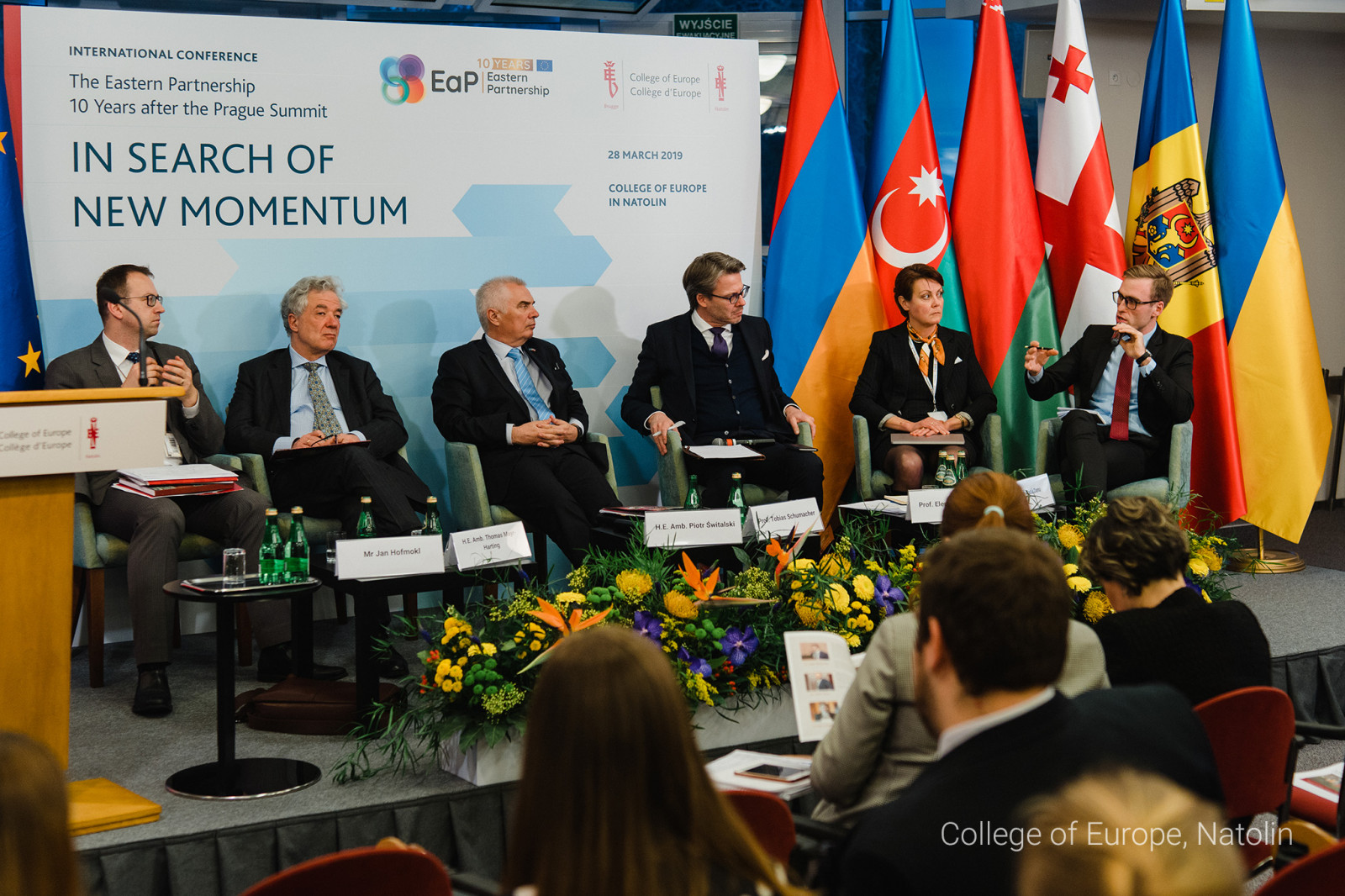
The European Interdisciplinary Studies programme at Natolin reflects the increasingly complex and interconnected nature of European integration and of the surrounding world. It is a truly European, horizontal academic programme and is devoid of a silo discipline approach present elsewhere. The programme addresses the internal and external dimension of the European Union, with a special focus on the EU’s neighbourhood and European history and civilization providing our students with the wider perspective on Europe.
Upon completion of the programme, students are awarded the "Master of Arts in European Interdisciplinary Studies" or the "Master of Arts in European Interdisciplinary Studies: European Security and Strategy".
The 2026-2027 EIS learning outcomes can be found here.
The academic programme in the first semester equips students with advanced general knowledge, orientation and skills to analyse the foundations of European integration. All students follow compulsory and core courses, which provide them with a common base of knowledge on the system of EU governance, the EU legal order, political economy of Europe, and European history, as well as an insight into the forces shaping the political environment of today’s societies. They also study EU external relations as well as the specificities of Central and Eastern Europe.
The first semester study trip offers to students a deeper understanding of European identities and a first-hand experience of policies in practice at the EU’s borders.
The European Security and Strategy Study Track (ESSST) has been conceived in response to the growing need in Europe for strategic thinking and expertise in the multidimensional facets of security. The programme addresses some of the most pressing contemporary challenges for Europe and the EU. The study track will be implemented across the entire academic year, in both semesters. Upon successful completion of the track, ESSST students will receive a degree in European Interdisciplinary Studies with the mention “European Security and Strategy”.
In the second semester, Natolin students who are not enrolled in the "European Security and Strategy Study Track" can choose one of four comprehensive thematic majors, customizable according to students’ interests:
| EU Public Affairs and Policies | The EU and the World |
 |  |
| The EU in the Wider Europe and its Neighbours | European History and Civilization |
 | 
|
| European Regional Studies | |
 |
Students can also take advantage of skill-oriented workshops and simulation games, which allow them to take a closer look at specific topics. A second study trip is organized in the second semester. They are also required to write a Master’s thesis on a topic related to one of the courses they have taken during the first and second semesters.
The academic programme above applies to the 2026-2027 academic year and reflects the version approved by the Academic Council as of 18 June 2026.
The Capacity Building Office offers a comprehensive agenda that complements the academic curriculum. It is designed to support students in making a successful transition from Natolin to the next steps in their career journey in Europe and beyond. Through the programme, students can shape their professional identity, expand their networks, and develop the mindset required to pursue rewarding careers in European institutions, diplomacy, civil society, academia, and the private sector.
In addition to benefitting from a bilingual study programme, students can take advantage of language courses on offer implemented by the Languages and Intercultural Dialogue Office. The courses are tailored to the individual students’ needs, and are also focused on transversal skills required by employers.
Total ECTS for this programme = 66 ECTS. For more detailed ECTS information click here.
Please note that the study programme might be subject to changes due to necessary updates or unforeseen circumstances.
On Monday, 24 August, we had the pleasure of welcoming the very first students of the Johannes Gutenberg Promotion to our Tirana campus! As they begin this new chapter, our students are getting to...