Coming in : sexual politics and EU accession in Serbia
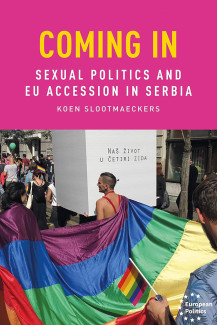
Description
Koen SLOOTMAECKERS. Coming in : sexual politics and EU accession in Serbia. Manchester : Manchester University Press, 2023, xiii, 234p.
This publication reconceptualises Europeanisation and studies how the EU Enlargement has shaped LGBT politics in Serbia. Questioning our ability to reduce LGBT liberation to rights and policies, the book moves beyond legal and institutional change to consider the political consequences the Europeanisation of LGBT rights has for people's lived realities. - LGBT rights have become increasingly salient within the EU enlargement process as a litmus test for Europeanness. But the promotion of these norms has provided a basis for political contestation. This book interrogates the normative dimensions of the EU enlargement process, with special reference to LGBT politics. Reconceptualising Europeanisation, it argues that EU enlargement is a process of negotiated transformation in which EU policies and norms are (re)defined, translated and transformed. Empirically, it analyses the promotion of and resistance to LGBT equality norms in Serbia’s EU integration process, but it looks beyond policies to the impact of the negotiated transitions on lived experiences. Overall, the book raises important questions about the political and social consequences of Europeanisation. At its heart is one crucial question: what do we consider progress?
This publication reconceptualises Europeanisation and studies how the EU Enlargement has shaped LGBT politics in Serbia. Questioning our ability to reduce LGBT liberation to rights and policies, the book moves beyond legal and institutional change to consider the political consequences the Europeanisation of LGBT rights has for people's lived realities. - LGBT rights have become increasingly salient within the EU enlargement process as a litmus test for Europeanness. But the promotion of these norms has provided a basis for political contestation. This book interrogates the normative dimensions of the EU enlargement process, with special reference to LGBT politics. Reconceptualising Europeanisation, it argues that EU enlargement is a process of negotiated transformation in which EU policies and norms are (re)defined, translated and transformed. Empirically, it analyses the promotion of and resistance to LGBT equality norms in Serbia’s EU integration process, but it looks beyond policies to the impact of the negotiated transitions on lived experiences. Overall, the book raises important questions about the political and social consequences of Europeanisation. At its heart is one crucial question: what do we consider progress?